Balcony, Floor or Side Room: Three Ways to Share a Show
Compare balcony, floor and side-room concert layouts by sightline, sound and sociability to choose a live music setting that suits how you listen.
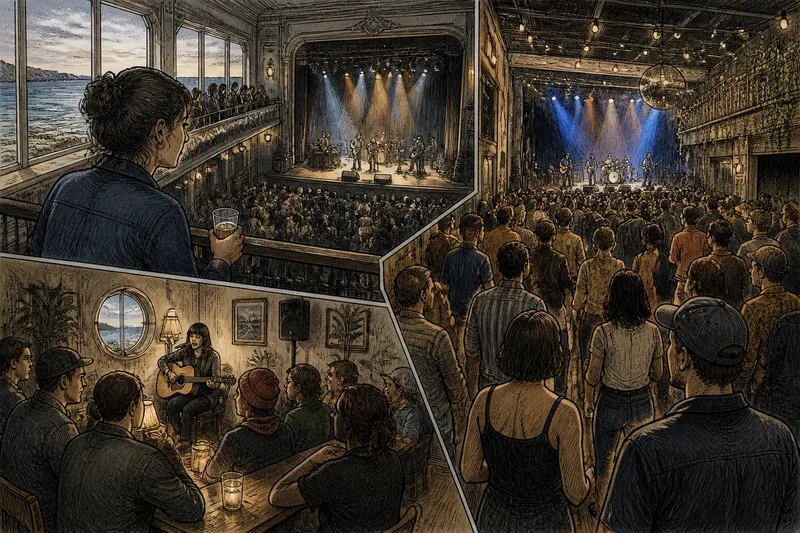
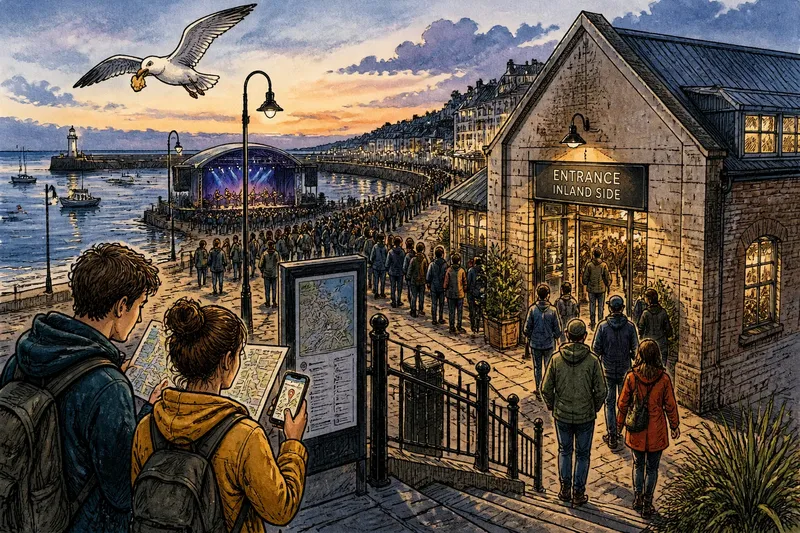
You arrive at a seaside venue with salt on your jacket and the first notes already threading through the room. From the balcony, the crowd becomes part of the view; on the floor, it moves around you; in a side room, a singer’s quiet phrase can feel close enough to catch between waves of conversation. Each layout changes the shape of a concert. The useful question is what kind of listening the room makes possible.
Three listening spaces
A balcony turns the stage into part of a wider scene. You can follow the full band, watch lighting sweep across the room and see how the audience responds. The floor places you within that response: a chorus may feel less like something to observe and more like something you share. A side room narrows the frame, bringing a smaller group and the musicians into closer focus.
Those differences are not a ranking. A raised view can feel distant during a performance built around small gestures; a busy floor can be exhilarating or distracting; a close room can make a subtle song vivid, but also expose every nearby conversation. The same layout can feel different from one event to another.
Balcony perspective
A balcony suits listeners who enjoy seeing how a performance fits together. From above, it may be easier to follow several musicians at once, notice movement across the stage and see the crowd respond as one shifting scene. A seated balcony can also offer a settled way to listen, though not every balcony is seated or aimed squarely at the stage.
Distance has a texture of its own. Facial expressions and small movements may be harder to catch, while the room’s lights and collective energy become more visible. If the performer’s presence depends on a close exchange with the audience, that wider view may feel less immediate.
Venues use “balcony” for different arrangements: a wraparound level, a side section, a row of seats or a standing ledge. A rail or angled seat can shape the view as much as the label. Check the seating plan for the section’s position, and ask the venue about a particular sightline if the diagram leaves it unclear.
Floor connection
On the floor, the crowd is part of the setting rather than a distant backdrop. You may feel the room gather around a chorus, catch quick exchanges between stage and audience, and move with the music where space allows. That closeness can make a familiar song feel newly vivid, but your view and comfort also depend on the people nearby.
Near the front, the performance can feel immediate, though your sightline may be affected by movement in the crowd. Further back, you may see more of the stage and have room to adjust your position, but fine details can recede. A spot beside a wall may feel less enclosed while keeping you among the audience.
Floor areas are not always standing-only, and arrangements can vary by event. If you need a particular viewing arrangement or have access questions, contact the venue before booking. For a calmer listening position, a seated area may suit better; if you want the shared pulse of the audience, a floor ticket may be appealing, provided the event’s format fits your needs.
Side-room closeness
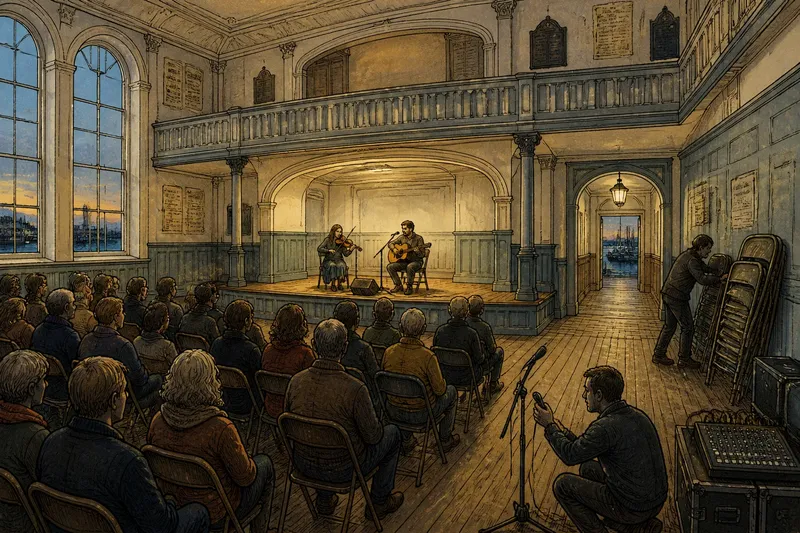
A side room can make a performance feel conversational. You may notice a quiet vocal line, an instrument being adjusted between songs or a small group settling into silence. This close focus can suit music that rewards detail, though the room itself does not determine what will be played.
Small spaces have their own complications. A pillar, doorway or cluster of people can shape the view; nearby conversation may carry across the room. If the space is separate from the main stage, check whether the event describes it as a performance area or an additional place to gather.
Layout questions?
Which spot gives the clearest view?
A balcony often offers a broad view, while a side room can put you closer to the performer. On the floor, sightlines depend on position and the audience around you, so the venue’s layout is more useful than the room name.
Where might I feel closest to the music?
The floor and side room usually bring a stronger sense of proximity, though the floor tends to feel more communal and the side room more focused. A balcony can still feel absorbing when the sound and crowd response draw you in.
Which area is likely to feel quieter?
A side room may be calm when the audience is attentive, but conversation can stand out in a small space. A balcony may feel less crowded than the floor, yet the atmosphere depends on the event and audience.
What should I ask the venue?
Ask about the specific area you are considering: whether it is seated or standing, how its sightline is affected by rails or pillars, and what access arrangements apply for that event. If the answer is uncertain, ask the venue to clarify before you book rather than relying on assumptions.
Choose by attention
Imagine you are choosing between a seated balcony and a standing side room for a songwriter you have never heard. You want to see their hands and catch quieter details, but you also dislike losing sight of the stage. You check the seating plan and learn that the balcony gives a clear full-stage view, while the side room is close but partly screened by a pillar. The balcony is the better match for your stated priorities; if closeness matters more than seeing every gesture, the side room remains a reasonable trade-off.
It is not worth spending hours trying to identify a supposedly perfect spot when the venue can only describe the general layout. Instead, decide which distraction matters most to you: a blocked view, crowd movement, distance from the performers or nearby chatter. Then choose the space where that concern is least central.
For a balcony, floor or side-room concert, the main search phrase—balcony, floor or side room concert—points to a practical choice about attention, not a winner. A wide view, a shared pulse or a close listen can each change how the same music lands. Pick the arrangement that fits the way you want to listen, and leave room for the night to surprise you.