How a Seaside Concert Venue’s Past Shapes Its Present
See how a seaside concert venue’s former purpose shapes its character, and learn which details make a converted hall feel distinctive on concert night.
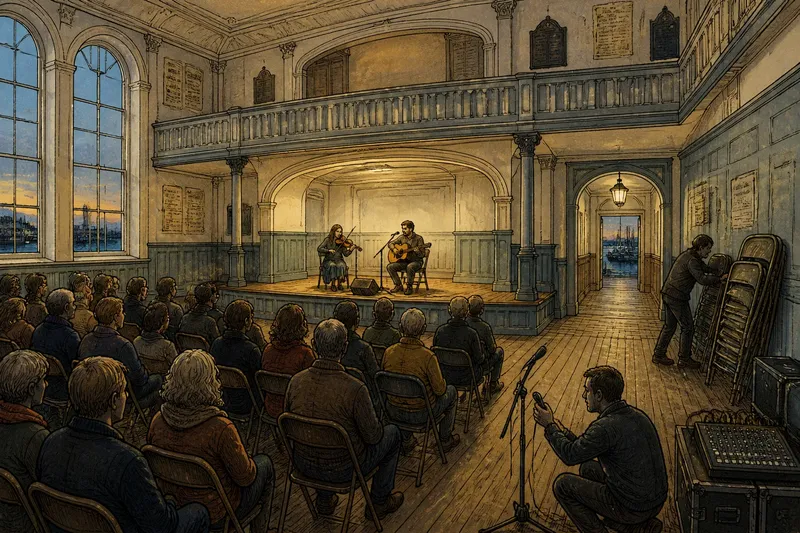
A caretaker stacks folding chairs beside a painted ceiling as a sound engineer checks a microphone. In a seaside concert venue, a room built for meetings or dances can become a listening space for the evening, with its old purpose still visible in the details.
That history is most interesting when it helps explain what you see now: a raised platform, a broad floor, a gallery or a corridor that once served another kind of gathering. It need not dictate the mood or music. Instead, it gives the concert room a second story, quietly present while the band plays.
Read the room’s past
Many coastal concert spaces began as places for public life. Assembly rooms hosted dances and celebrations; civic halls held speeches and ceremonies; former chapels, warehouses and maritime buildings have also found new uses. Renovations may soften the evidence, but the original purpose can remain legible in the proportions and features of a room.
A broad, open floor may have accommodated several kinds of gathering. A balcony or gallery might have offered a view of a speaker, while a long hall could have drawn attention towards a central platform. Today, those features become part of the setting: musicians may perform where officials once stood, or a flexible floor may gather listeners beneath the old gallery.
The contrast is often more revealing than a building’s age. A room once used for formal speeches can host an intimate folk set; a former dance hall can hold a quiet audience. Architecture supplies atmosphere, but the people and performance give the room its meaning tonight.
Notice the room’s character
Look at how the room frames the performers. A high ceiling can make a hall feel expansive, while a low ceiling can bring the stage visually closer. Columns, alcoves, timber beams and old windows lend the space a particular rhythm, even when they have little to do with the music itself.
Materials also contribute to the room’s feel. Plaster, wood and glass can reflect sound; curtains, upholstered seats and a crowd can absorb some of it. The overall result depends on the room, sound system and performance together, so one architectural feature cannot tell you exactly what a concert will sound like.
Coastal buildings have their own visual character. Harbour-facing windows may connect the room to the water, though after dark they can reflect the audience back into the hall. A corridor with old fittings or a view towards working boats can make a brief walk to the performance space feel like part of the evening, without turning the concert into a history lesson.
Keep the history in perspective
Imagine you are attending a folk duo’s concert in a former assembly room. The stage stands beneath a gallery, and the walls retain faded notices from the building’s civic days. You notice the platform and gallery as traces of the room’s past, then settle in to listen; the old layout adds context, but the musicians—not the building’s original function—shape the performance.
This is a useful way to approach converted venues: let the details spark curiosity without treating them as clues to a hidden story. A raised platform may once have held a speaker, but tonight it may simply be the best place for a singer and a guitar. An old dance floor can feel still and attentive when the music asks for quiet.
Some buildings make their history part of the visit, with displays or information about former uses. If that interests you, take a look. Otherwise, researching every previous tenant, tracing old room names or dating each fitting is not worth the effort; a quick glance at the features around you is enough to appreciate the contrast.
Questions about historic venues?
What features reveal a room’s former purpose?
A raised platform, gallery, broad floor or formal entrance can hint at how people once gathered there. These clues suggest a past use, but renovations and changing arrangements mean they are not proof on their own.
Does a venue’s history predict the concert atmosphere?
No. A former civic hall can host a relaxed set, and an old dance space can become quiet and focused. The musicians, audience and current event shape the evening more directly than the room’s original purpose.
Why do converted halls sound different?
Room shape and materials can affect how sound reflects or is absorbed. The sound system, audience and style of performance also matter, so architectural details alone cannot predict what you will hear.
Should I research a venue’s history before going?
Only if the building’s past interests you or the venue offers information that adds to your visit. A few visible details can be enough; there is no need to turn a concert outing into an architectural investigation.
Let the present lead
A converted room can hold several lives at once: the gathering it was built for, the changes made over time and the concert taking place now. A former assembly hall may still suggest public speaking in its platform and gallery, even as a guitar and a small audience give it a new purpose.
For a seaside concert venue, the building’s character is a companion to the music rather than a substitute for it. Notice the old features, enjoy the contrast, then give your attention to the performance unfolding in the room.