The Myth of the Perfectly Timed Concert Night
Plan a coastal concert night around flexible arrival, venue access and a clear meeting point, leaving room to enjoy the music without micromanaging every stop.
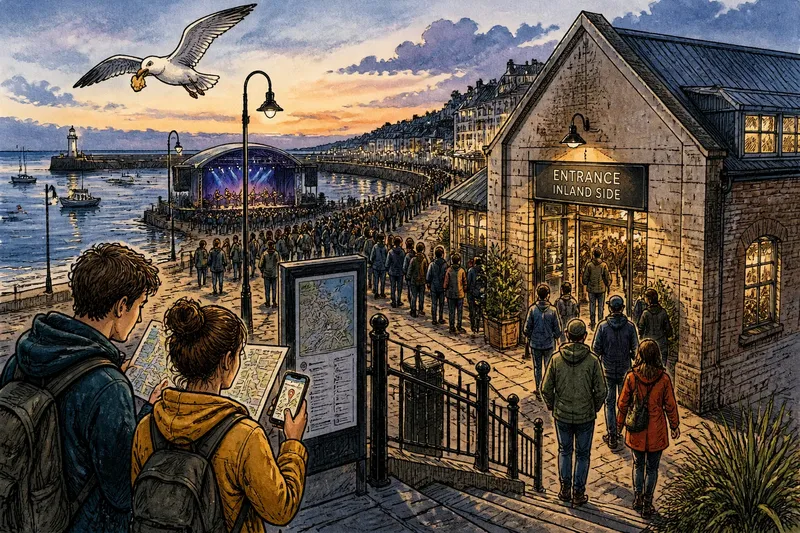
You reach the seafront venue just as a gull snatches someone’s chips, a busker’s trumpet cuts through the harbour noise and the queue bends around the corner. A coastal concert night is shaped by more than its set time: entrances, exposed walkways and the way people spill out afterwards all matter. Plan around the venue itself, and the evening has a better chance of feeling like a night out rather than a route march.
Read the venue
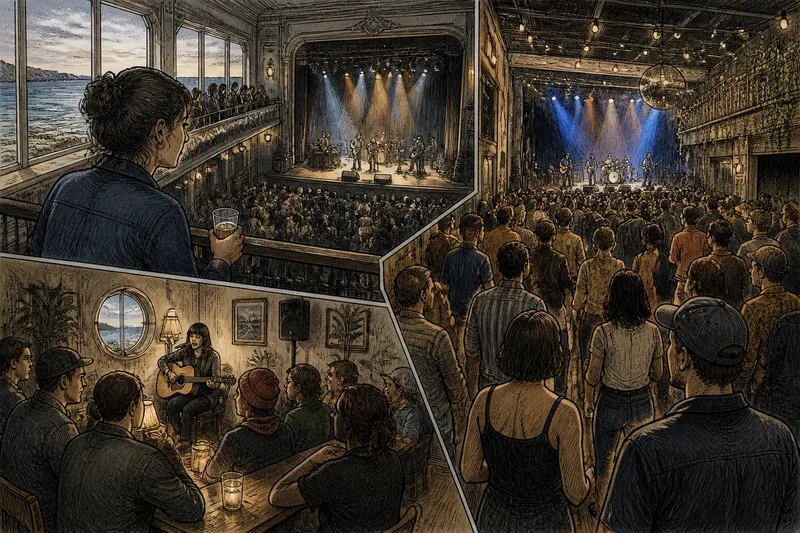
Before choosing where to meet or how early to arrive, check the venue’s own information. A concert hall on the promenade, a converted sail loft and an outdoor stage beside the beach can have very different entrances, ticket checks and shelter arrangements.
Look for the exact entrance, whether tickets are scanned at the door or at a separate point, and what the venue says about bags, re-entry and accessible access. If the site has more than one gate, save the correct one in your map app. A pin dropped at the venue’s centre may lead to a locked service entrance or the wrong side of a fenced event site.
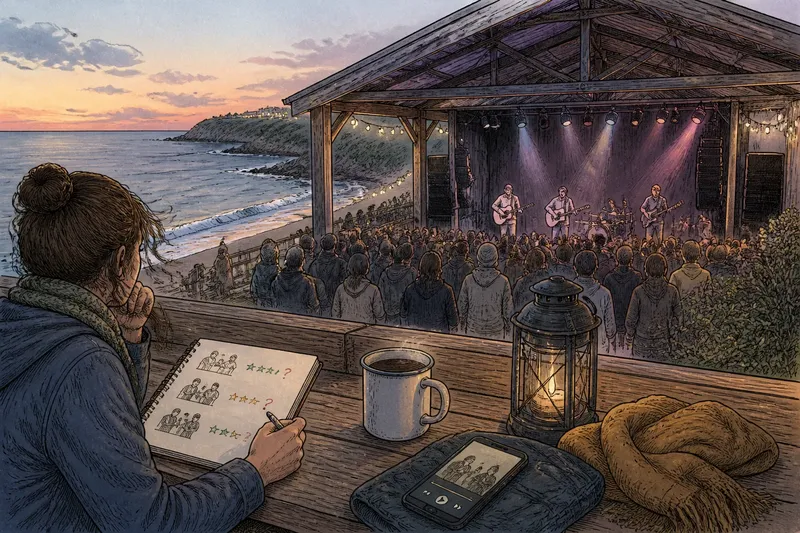
Weather matters most where it changes the practical experience. For an open-air show, check what the organiser says about rain, wind, shelter and permitted clothing or equipment. A waterproof layer is often more useful than an umbrella in a dense crowd, but follow the venue’s rules rather than guessing.
Choose your arrival
Doors opening is an option, not an instruction to be there at that exact moment. Arrive early if you want to settle in, see a support act or avoid feeling hurried at the entrance. If none of those matters, use the advertised performance time and the venue’s entry guidance to choose a comfortable arrival window.
Coastal routes can be awkward in ways a straight line on a map does not show. A station may be close as the gull flies but separated from the venue by a busy road, a steep approach or a long stretch of promenade. Check the walking route and its access details, especially if anyone in your group uses a mobility aid or needs to avoid stairs.
Do not build the evening around a chain of tight hand-offs. A fixed dinner booking, a distant meeting point and a narrow arrival window leave little room for a slow service or a crowded pavement. Keep the venue’s entry requirements firm and let optional stops remain optional.
Make the harbour legible
Seaside venues often sit among landmarks that sound obvious until a crowd fills the view: the old pier, the bandstand, the lifeboat station or a particular end of the promenade. When meeting someone, name a precise, public spot that is easy to recognise and does not block an entrance or pavement.
For a group, agree on a simple plan for losing contact. Choose a meeting point and a moment to use it, such as after the performance, rather than sending everyone to search through the crowd. If phone reception is unreliable or batteries are low, a visible landmark is more useful than a string of messages.
Say you and a friend have tickets for a small venue near a harbour. The venue’s map shows its entrance on the inland side, while your first map search pins the building on the promenade. You save the entrance location, agree to meet beside the public information board nearby, and decide that either of you can go in if the other is delayed. The practical result is a clear destination and a way to avoid missing the opening while waiting in the wrong place.
Keep the outing flexible
Food can be part of the occasion or simply a way to avoid standing through a set on an empty stomach. If a particular restaurant is central to your plans, check its booking and kitchen arrangements. Otherwise, choose from places that fit the route and leave enough room to change your mind if the seafront is busy.
It is not worth spending the afternoon comparing every café within walking distance. Pick one convenient option and, if needed, one nearby alternative; then stop researching. The night does not improve because every possible snack has been ranked in advance.
Leave some unclaimed time for the texture of the place: salt on the railings, a view over the water or a short pause before the doors. Those moments are not extra itinerary items. They are what gets squeezed out when every stop has a deadline.
Handle the way home
After a show, the crowd may leave by several routes at once. Before you go in, know the broad direction to your station, bus stop, car park or accommodation, and check the current service information for any transport you depend on. If a route has a final departure you cannot miss, decide beforehand whether you are willing to leave early or need another arrangement.
Do not assume a taxi, ride-hail car or late-night food counter will be available just because the venue is near a town centre. If your options are limited, make a realistic plan with the relevant transport operator or a trusted person. For an unfamiliar route, follow signed public paths and venue guidance rather than taking a shortcut along a dark or restricted stretch of shore.
Once you have settled the practical decision, let the performance take your attention. A reminder can be useful if you need to leave at a particular time; repeatedly checking the clock between songs adds worry without making the exit any easier.
What matters on the night?
Should I arrive before the support act?
Arrive in time for the support act if you want to see it, or if the venue recommends an earlier arrival for entry checks. If you are going only for the main performance, check the event information and allow enough time for the entrance and any route complications.
Where should friends meet?
Choose a named, visible public landmark near the correct entrance, not a vague instruction such as “outside”. Agree what to do if someone is delayed, so the group is not left waiting in a queue or blocking a busy walkway.
What should I check for an outdoor show?
Read the organiser’s guidance on weather, shelter, bags and permitted items, then dress for the conditions and the time spent standing outside. If the event’s status or access arrangements may change, check its official updates before setting off.
How do I avoid missing my transport?
Check the route and the operator’s current timetable before the show, then decide whether you can stay to the end. If the final service leaves too soon for a comfortable exit, arrange a realistic alternative or accept that you may need to leave early.
Leave room for the music
A coastal concert night needs only a few decisions made clearly: the right entrance, a meeting point that everyone can find and a workable way home. Keep the optional parts loose, and the evening can respond to a crowded promenade or a sudden shower without becoming a second job.
That is the useful balance behind a flexible concert-night plan: make the venue and access details easy to act on, then leave space for whatever catches your eye between the harbour and the first chord.