Why a Multi-Act Bill Has Its Own Evening Shape
Choose a multi-act concert bill by weighing its contrasting sounds and set order, so you can decide whether the full evening suits the night you want.

You spot a favourite headliner on a seaside venue’s poster while the kettle boils. The other names are unfamiliar, but they will shape the hours before that final set. Choosing a multi-act concert bill means deciding whether the whole sequence appeals—not simply whether the headliner does.
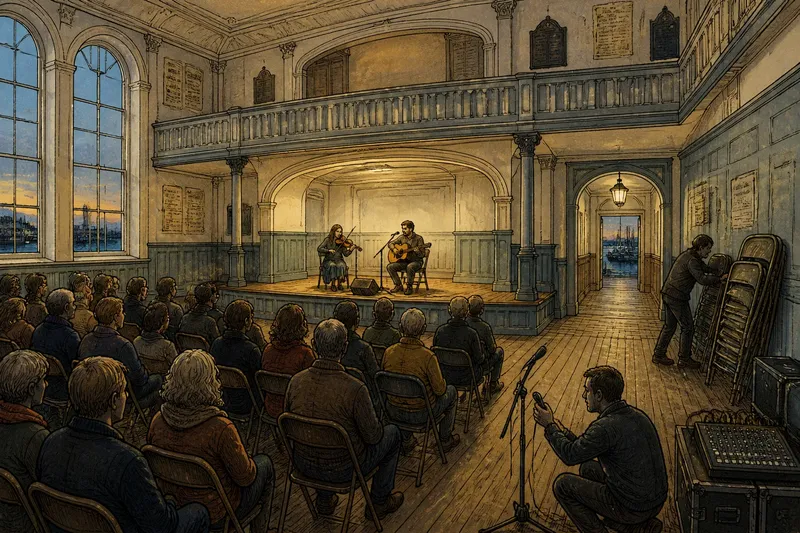
A bill can move from hushed acoustic songs to a crowded dance floor, or hold one mood from doors to encore. Its shape comes from the performers’ sounds, the gaps between their sets and the room around them. On the coast, that room might be an open-sided pavilion with the evening air drifting through, or a snug hall with rain ticking against the windows.
Read the running order
Start with the venue or promoter’s latest listing. A poster may show several artists without naming their order, and an announced line-up can change. If the sequence matters to your decision, look for a published running order; if none appears, treat the order as unknown rather than guessing from the size or placement of names.
Give each unfamiliar performer a short listen. A track on Bandcamp, a live clip or a session video can reveal more than a genre label: notice the pace, vocal style, instrumentation and energy. You are not trying to become an expert before booking. You are checking whether the bill has enough sounds you would willingly spend time with.
For each name, jot down a quick response: favourite, curious or probably not for me. That distinction helps separate a bill you want to hear in full from one you are choosing chiefly for the headliner. An opener you do not know may be a pleasure to discover, but unfamiliarity alone is not a reason to assume you will enjoy it.
Listen for contrasts
Consider what happens as one act gives way to another. Related artists can create a coherent evening; sharp contrasts can make the bill feel like several musical rooms in one venue. Neither approach is inherently better. Ask whether you want a steady atmosphere, a change of pace or the chance to hear a style outside your usual orbit.
A folk group followed by a loud guitar band may offer a marked shift in energy. Two restrained songwriters could instead make a reflective, connected pairing. The point is not to predict every audience reaction or stage transition, but to notice the qualities you can hear in the performers’ available recordings and decide whether that mix sounds appealing.
Consider the venue
The same musical sequence can feel different in an open-air space and a sheltered room. Wind, cooler air and the degree of shelter may affect your comfort at a coastal site; a smaller indoor venue may make a quiet vocal performance feel especially close. Check the venue’s own weather guidance and practical information rather than relying on assumptions about the setting.
Look for the stated doors and music times, set information and changeovers. Doors opening does not necessarily mean the first act starts straight away, and schedules may be revised. A pause between performers can give you room to find a drink or rest your ears; a brisk changeover may keep the evening moving. Use the published details to understand the format, not to build an exact timetable in your head.
For entry arrangements, access provisions, re-entry rules and other restrictions, consult the venue or organiser. Those details can depend on the specific event and ticket conditions. A quick check of the source is more useful than trying to infer the rules from a previous concert.
Choose your bill
Before booking, decide what you want the evening to contain. If the headliner is your main draw, ask whether the supporting sets and time at the venue still make an acceptable outing. If you are choosing for the full line-up, consider whether you would enjoy the supporting acts even if the headliner were not the only familiar name.
Say you are choosing between two fictional coastal dates. On the first, the headliner you like is paired with a slow, spare opener and a bright folk duo; on the second, the same headliner shares the bill with two guitar groups whose recordings all sound forceful. You listen to one track from each supporting act. If the first date’s contrast sounds welcome, you choose it for the changing textures; if you would rather stay with the second date’s sustained intensity, you choose that instead. The starting point is the same favourite, but the supporting sounds lead to different reasonable decisions.
If the same headliner appears on more than one date, compare the supporting performers and the event information, not just the headline name. A poster’s visual order does not confirm the running order, so keep any imagined sequence separate from what the organiser has actually announced.
- Check whether the organiser has published a running order; if it has, use that sequence to judge the bill, and if it has not, assess the acts without assuming who plays first.
- Check whether the event listing identifies a headliner and support performers; if their roles are clear, consider how much of the evening you want to hear, and if they are not, ask the venue for clarification or decide using the names alone.
- Check one track or live clip from each unfamiliar act; if a sound interests you, count that performer as a reason to go, and if it does not, weigh the bill more heavily on the acts you already like.
- Check whether the supporting acts share a sound or offer a contrast; if you want a coherent mood, favour the closer match, and if you want variety, favour the bill with changes you find appealing.
- Check the published doors and music times; if they fit the outing you want, keep the event in consideration, and if they do not, compare another date or venue.
- Check the venue’s guidance for weather, access and re-entry; if the arrangements suit your needs, proceed with a clearer picture of the night, and if a detail is unclear, contact the venue before deciding.
Questions about bills?
Is the headliner enough reason to go?
It can be, if the supporting sets and the time spent at the venue still sound acceptable to you. Treat them as part of the outing you are choosing, rather than assuming you must love every act.
How can I judge an unfamiliar opener?
Listen to a track or live clip and notice its sound, energy and mood. You need only decide whether you feel curious enough to hear more.
Does a longer bill make a better night?
Not by itself: a longer line-up can offer more variety, but the individual acts and their relationship matter more than the number of names. Consider whether you want the extra listening time and the changes in mood.
What if there is no running order?
Check the venue or promoter’s latest event information, then treat the sequence as unconfirmed if it is still absent. You can assess the artists together without making your choice depend on an imagined order.
Leave room for surprise
It is not worth tracking down a complete set list for every performer or trying to forecast the precise emotional curve of the night. Artists may change their material, event details can shift and the room contributes a feel that recordings cannot settle in advance. A short listen and an honest sense of your preferences are enough to make a considered choice.
When weighing a multi-act concert bill, let the running order inform your expectations without dictating them. The useful question is whether the names, sounds and setting make a satisfying evening for you; a clear answer leaves room for an unexpected favourite without requiring one.